

Past Events
Speaker: Ruqaiijah Yearby, Co-Founder and Faculty Affiliate, The Institute for Healing Justice & Equity; and Kara J Trott Professor in Health Law, Moritz College of Law, The Ohio State University
Time: 12:00 pm - 2:15 pm
Location: Wynne Courtroom (Room 100), Inlow Hall, 530 W. New York Street, Indianapolis, IN
The Indiana University Robert H. McKinney School of Law Center for Law and Health proudly presents the McDonald-Merrill-Ketcham Award to Professor Ruqaiijah Yearby.
Yearby will discuss how structural racism in law and medicine are associated with racial and ethnic minority individuals’ health inequities and discuss how the adoption of the Health Justice framework can be used to eradicate racism and redress the harm.
This is an in-person only event and will not be live streamed. This program will be offered for 2.0 hours Traditional Indiana CLE credit.
E-mail certificates will be provided certifying attendance for those wishing to apply for CLE credit outside of Indiana.
CEU Certificates are available for Indiana Behavioral Health & Human Services Providers.
Award Lecture: “Structural Racism in Law and Medicine: The Root Cause of Health Inequities”
Presentation Description: Since the formation of the United States to the present day, structural racism in law and medicine has limited racial and ethnic minority individuals’ ability to be healthy. Structural racism is both the limitation of racial and ethnic minority individuals’ access to resources as well as the way social and economic conditions are organized to advantage White individuals and disadvantage racial and ethnic minority individuals. Law is one of the tools used to limit racial and ethnic minority individuals’ resources as well as organize social and economic conditions in a racially discriminatory way, which has been associated with racial and ethnic minority individuals’ health inequities. These conditions are justified by structural racism in medicine, which continues to maintain the false idea that White individuals are biological superior to racial and ethnic minority individuals. During my talk, I will discuss how structural racism in law and medicine are associated with racial and ethnic minority individuals’ health inequities and discuss how the adoption of the Health Justice framework can be used to eradicate racism and redress the harm.
MMK Agenda
FRIDAY. FEBRUARY 24, 2023
| 12:00 - 12:10 p.m. | Welcome, Introductory Remarks:
|
| 12:10 - 1:10 p.m. | Award Lecture: “Structural Racism in Law and Medicine: The Root Cause of Health Inequities” Awardee/Keynote Speaker:
(1 hour CLE, which will include 10 minutes of audience Q&A moderated by Aila Hoss, JD, Associate Professor of Law, IU McKinney School of Law) |
| 1:10 - 1:15 pm. | Introduction of Panelists by Dr. Rakesh Mehta, MD, Vice Chair for Education, Associate Professor of Clinical Medicine, Richard C. Powell Scholar in Medical Education, Indiana University School of Medicine |
| 1:15 - 2:15 p.m. | MMK Panel:
(1 hour CLE, which will include 10 minutes of audience Q&A moderated by Dr. Rakesh Mehta, MD, Vice Chair for Education, Associate Professor of Clinical Medicine, Richard C. Powell Scholar in Medical Education, Indiana University School of Medicine) |
Awardee/Keynote Speaker
Ruqaiijah Yearby, JD, MPH
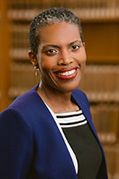
Ruqaiijah Yearby, J.D., M.P.H, is the inaugural Kara J. Trott Professor in Law at the Moritz College of Law and a faculty affiliate of the Kirwan Institute at The Ohio State University. She is also Co-founder and a faculty affiliate of the Institute for Healing Justice & Equity.
Recently, Professor Yearby received over $5 million in grant funding from the National Institutes of Health and the Robert Wood Johnson Foundation to study structural racism and discrimination in vaccine allocation as well as the equitable enforcement of housing laws and structural racism in the health care system. Her work has been published in the American Journal of Bioethics, Health Affairs, and the Oxford Journal of Law and the Biosciences and used in law, medical school, and social science classes at schools such as Harvard, NYU, Fordham, and the University of California Berkeley.
She earned her B.S. in Honors Biology from the University of Michigan, M.P.H. from Johns Hopkins School of Public Health, and her J.D. from Georgetown University Law Center. She worked at the U.S. Department of Health and Human Services as an Assistant Regional Counsel and served as a law clerk for the Honorable Ann Claire Williams of the U.S. Court of Appeals for the Seventh Circuit.
Panelists
Panelist 1: Shawneequa Callier, JD, MA

Presentation Title: "Race, Clinical Algorithms, and Health"
Presentation Description: Clinical algorithms can offer innovations in diagnosis in health care settings. However, the use of race and racial stereotypes in these algorithms can impact diagnosis and, in turn, treatment and health outcomes. This presentation will discuss the role of clinical algorithms in perpetuating health inequities and how the law can mitigate them.
Bio: Shawneequa Callier, J.D., M.A., is an Associate Professor in the Department of Clinical Research and Leadership at the George Washington University School of Medicine and Health Sciences (SMHS). Professor Callier teaches courses in bioethics and serves as a Special Volunteer at the Center for Research on Genomics and Global Health, National Human Genome Research Institute, National Institutes of Health. On several occasions in the past, Professor Callier taught Genetics and the Law as an adjunct at GW Law.
Prior to joining the GWU faculty, Professor Callier completed a post-doctoral fellowship at the Center for Genetic Research Ethics and Law, an interdisciplinary center for excellence funded by the National Human Genome Research Institute and located in the Bioethics Department of Case Western Reserve University’s School of Medicine. Earlier in her career, Professor Callier practiced health care law as an attorney in Washington, D.C. She also interned at the World Health Organization and the Nuffield Council on Bioethics where she examined international healthcare ethics policies and human genetics laws and guidelines.
Panelist 2: Aila Hoss, JD
Presentation Title: "The Structural Violence of Federal Indian Law"
Presentation Description: Federal Indian law is the body of law that defines the rights, responsibilities, and relationships between three sovereigns, Tribes, states, and the federal government. Much has been documented in terms of the implications of social, legal, political, and economic systems that perpetuate inequities amongst American Indian and Alaska Native populations, including health inequities. This presentation will discuss how federal Indian law is a structural determinant of health by linking health disparities to the constructs of this body of law.
Bio: Aila Hoss is an Associate Professor at Indiana University McKinney School of Law where she teaches and researches at the intersection of health law and federal Indian law. Professor Hoss practiced public health law as a staff attorney with the Centers for Disease Control and Prevention’s Public Health Law Program, where she provided legal technical assistance to state, Tribal, local, and territorial governments. She completed her BA at Emory University and her JD at the University of Oregon. She is an active member of the Indiana bar and a proud Iranian-American.
Panelist 3: Dr. Tiffany Kyser, PhD
Equity Dispatch: Special Issue

Presentation Title: "Intentionally Centering Civil Rights in Examining School Conditions Impacting Students’ Mental Health"
Presentation Description: This presentation is designed to provide key practices of supporting safety and health in schools by adhering to civil rights law. The presentation aims to build participants’ awareness of oppressive conditions in schools which pathologize trauma and compromise civil rights protections followed by offering key components and practices that support mind-body wellbeing of students within our educational systems.
Bio: Dr. Tiffany S. Kyser (She/Her/Hers), is a former middle school and high school teacher and administrator. She has 19 years experience in outreach education, K-12 teaching and administration, higher education administration, charter school authorizing, and education policy. Her work is rooted in education policy, school transformation, adult learning, liberatory design, and change management.
Dr. Kyser's research has been accepted by various scholarly consortiums and research societies some of which include the American Education Research Association, Design-Ed, Critical Race Studies in Education Association, American Education Studies Association, the Indiana Urban Schools Association, International Conference on Urban Education, the Design Management Institute, University Council for Educational Administration, the Academy for Educational Studies, and the Journal of Curriculum Theory. Most recently Dr. Kyser was a contributing author to Strengthening Anti-Racist Educational Leaders: Advocating for Racial Equity in Turbulent Times.
Dr. Kyser has been fortunate to receive a myriad of awards and serves on many boards and committees. She currently serves as the Associate Director for The Great Lakes Equity Center, and Associate Director of Networks and Engagement for The Midwest and Plains Equity Assistance Center— a USDOE funded, Region III Equity Assistance Center (EAC). Dr. Kyser has received executive training at Harvard, Stanford, Northwestern, and Indiana Universities. She is a graduate of Culver Girls Academy of the Culver Academies. She holds a Bachelor of Science in Education, a Master of Arts in English, and a PhD of Philosophy in Urban Education Studies from Indiana University.
Moderator: Dr. Rakesh Mehta, MD
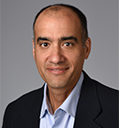
Bio: Dr. Mehta is an associate professor of clinical medicine in the Division of Hematology-Oncology at the Indiana University School of Medicine. He graduated from the Penn State University College of Medicine, and then completed his Internal Medicine Residency and Hematology Fellowship at the University of Wisconsin-Madison. His clinical focus has been classical hematology with a particular passion for coagulation medicine.
He has had several roles within the School of Medicine during his tenure at the IU, including being an Associate Program Director for the IM residency and the Associate Dean for Medical Student Affairs. When the school’s curriculum was overhauled, he helped lead the development of a new, more interactive hematology course. He served as the Interim Division Director for the Division of Hematology-Oncology in 2020-2021. In 2020, he was fortunate to be selected to be the Vice Chair for Education for the Department of Medicine.
Parking:
Parking is available for a nominal fee at the campus Gateway Garage, located on the corner of Michigan and California Streets (Address is 525 Blackford Street). Parking is also available for a nominal fee at the Natatorium Garage two blocks west of the law school.
Accommodations:
Individuals who need special assistance should call (317) 278-3857 no later than one week prior to the event. Special arrangements can be made to accommodate most needs.
