

News Archive
IU McKinney Student Research Focuses on Obstacles to Dialysis for Undocumented Immigrants
02/26/2016
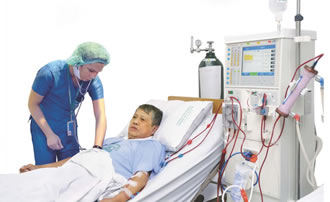 Two clinic students from IU McKinney School of Law released a report entitled “Dialysis Access for Undocumented Immigrants in Indiana” which shines a light on the difficult situation of a vulnerable population in Indiana. Pooja Kansal and Katherine Voskoboynik, both 3L students in the Health and Human Rights Clinic, researched the federal law and approaches that other states and communities have used to address this issue. They also conducted interviews with patients, physicians, and lawmakers and made recommendations on how Indiana can tackle this problem in a fiscally responsible way.
The students’ work has now helped to draw media attention to the issue. A story on this topic by reporter Jake Harper aired on the radio (February 24, 2016, WFYI) and appeared on line as well (“Medicaid Rules Are Causing Undocumented Immigrants To Get ‘Bad Care for High Costs,” February 24, 2016, SideEffectsPublicMedia.org). It also ran on NPR (March 8, "Medicaid Rules Can Thwart Immigrants Who Need Dialysis," NPR.org) and on Here & Now (March 25, "Undocumented Immigrants Face Health Care Challenges," hereandnow.wbur.org).
“The current situation is a human rights tragedy for these patients and their families, and a real failure of our current healthcare system,” said Professor Fran Quigley, ’87, who directs the Health and Human Rights Clinic and supervised the students’ research. “I am proud that Katherine and Pooja took the time to interview these patients and their caregivers, carefully research the law and the finances, and present this important report. It is important to point out that they do not stop with describing this human rights crisis: they propose a commonsense solution and issue a true call to action.”
The report says, “End-Stage Renal Disease (ESRD) disproportionately affects the undocumented immigrant community in the United States.” It goes on to explain that this group is blocked from government programs such as Medicare and Medicaid, which means they often do not receive the care they need until they are on the brink of death and cannot be refused care.
Because states have the power to determine access to public benefits for undocumented immigrants, thereby giving them access to state Medicaid funds, some states, the report points out, “have qualified ESRD as an ‘emergency medical condition’….triggering Medicaid coverage for outpatient dialysis and ultimately reducing the financial and moral burden of this care.” The students’ report strongly urges Indiana to follow this same path.
Professor Quigley is a clinical professor of law. Clinic students advocate for rights on behalf of low-income Hoosiers, and have a special focus on representing low-wage workers.
