

News Archive
Reckless Opioid Sales? There's a Law for That
08/15/2019
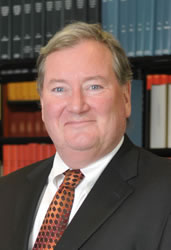 As IU McKinney School of Law Professor Nicolas Terry studies the relationship between the U.S. health care system and the nation’s opioid abuse epidemic, he wondered whether there was no law on the books that could have slowed the massive oversupply of prescription opioids.
Professor Terry explores that question in an August 15 article for The Conversation, and finds evidence that lax government enforcement of an existing law, the Controlled Substances Act, allowed manufacturers and distributors of opioids to ship an estimated 76 billion opioid pain pills to U.S. health care professionals, hospitals and pharmacies between 2006 and 2012, according to media sources.
As the national death toll continues to rise and landmark opioid litigation is underway in federal court, a new federal law President Donald Trump signed in 2018 and more aggressive enforcement seem to be steps in the right direction, according to Professor Terry. “However, it remains unclear why it took them so long to use the powers they already had to stop reckless shipments,” Professor Terry writes.
Professor Terry is Hall Render Professor of Law and Executive Director of the Hall Center for Law and Health at IU McKinney, where he teaches healthcare and health policy courses. He serves on Indiana University’s Grand Challenges Scientific Leadership Team working on the response to addictions. He blogs at Harvard Law School’s Bill of Health, his “The Week in Health Law” podcast is at TWIHL.com, and he is @nicolasterry on twitter.
