

News Archive
Academic Achievement Awards Recognize Student Performance
06/13/2022
 When recent IU McKinney Law graduate Tad Durham, ’22, first decided to apply to law school, he was confident that life experiences after graduating from Butler University and success at an Indianapolis entertainment startup would help him—in very practical ways—succeed in law school.
“My undergraduate grades were just OK. My LSAT scores were OK. I wasn’t the perfect candidate on paper,” Durham (left) says. “The work ethic that I developed while working in my 20s was going to be my biggest advantage, but that wasn’t really reflected in either my scores or academic history.”
In fact, Durham has done well in law school and mid-way through his second year, IU McKinney recognized his efforts with a First-Year Academic Achievement Award.
The law school-provided institutional aid program was created in 2019, when 10 IU McKinney Law students were part of the inaugural First-Year Academic Achievement Awards program. Since then, a total of 55 students have received such awards.
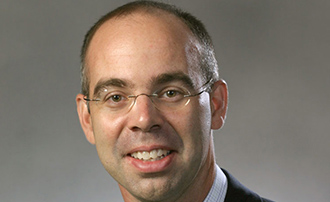 IU McKinney Vice Dean and Professor of Law Mike Pitts (left) conceived of the First-Year Academic Achievement awards in 2018, when he began looking at how institutional aid —almost exclusively provided to entering law students—might also help rising 2L students.
At first, the idea seemed counter-intuitive: Most U.S. law schools, in competitive fashion and with an eye toward U.S. News and World Report rankings, only offer institutional aid to entice new, high-achieving student applicants to enroll.
Yet, looking at student performance at IU McKinney, Vice Dean Pitts believed that there was a pool of students who deserved recognition and institutional financial support for their academic achievement. Some students who do not earn institutional aid upon admission because of a lower-than-average academic profile at the time of their applications end up outperforming those with higher traditional entering indicators, such as GPA and LSAT scores, he said.
Pitts pitched the idea of a new program for students entering their second year of law school to Andrew R. Klein, then dean of IU McKinney Law, and formed a committee to develop a plan. Recognizing that a program for rising 2L students could encourage academic success and help attract and retain students not initially offered institutional aid, the committee created guidelines for a new academic award program.
“We concluded that these students merited support,” Vice Dean Pitts said. “It’s likely that students who receive very little support at the outset of law school graduate with higher debt levels. Every additional dollar of institutional aid likely reduces the overall debt levels of a McKinney graduating class.”
“That’s really important. We think law schools would generally be better places if we provided more need-based aid and this framework at least represents an incremental step in that direction,” Vice Dean Pitts said.
Ashlyn Carter, ’21, is an associate at DeFur Voran LLP where her practice focuses on general business and corporate law, credit and real estate transactions, land use, and zoning. She recalls knowing, going into law school, that she was unlikely to receive much financial assistance from IU McKinney because she applied in the spring after most of the available aid had been promised.
She did so well in her 1L year that she was part of the first cohort of students to receive the First Year Academic Achievement Award. “The fact that I was eligible for this award was like a second chance,” Carter says.
To be eligible for an award, a student must have little or no law school provided institutional aid at the outset of their law school career. Students must also have achieved a GPA of 3.1 or higher at the end of their first year and a demonstrated financial need. Applications are due in June each year after spring grades are released.
For Durham, the award lessens the amount he borrowed to earn his JD degree.
“Almost more than the dollars and cents is the acknowledgement of my efforts, which couldn’t have been predicted on my application,” Durham says. “I’m grateful for that.”
