

News Archive
Meet IU McKinney Alumna Erin Albert
12/11/2024
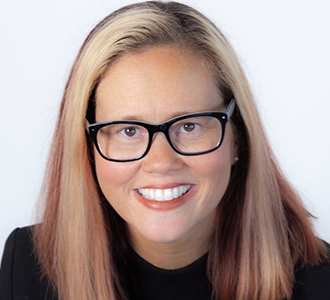 Erin Albert, J.D. ’12, serves as vice president of pharmacy relations and chief privacy officer at Mark Cuban Cost Plus Drug Company.
Where are you from originally?
South Bend, Indiana.
Did you work before coming to law school? If so, please tell me a little about that, if you would.
Yes, I was a part-time evening student, as I had a full-time day job at Butler University teaching in the College of Pharmacy and Health Sciences (COPHS). All my graduate school experiences were part time while working full time.
What brought you to IU McKinney?
Two major facts convinced me IU McKinney was the right law school for me. One: The evening program at IU McKinney. The school was founded as a part-time program for working professionals, which I greatly appreciate as someone who never went into debt over any post-grad formal education. And two: The health law program, which at the time was nationally ranked at or near the top 10 health law programs in the US. I'm a pharmacist, and at the time, the Affordable Care Act was rolling out nationally as well. I thought then and now that healthcare professionals need to know the language of the law, and the attorneys need to understand how healthcare works in the real world. Sometimes, translation services are helpful here between the two worlds. That's why I felt compelled to go to law school—to serve more as a translator for both professions.
Any lawyers in the family? What made you want to become a lawyer?
No. I am a first-generation college graduate in my family. Pharmacy is one of the most highly regulated industries in the U.S., and yet most regulators do not understand the pressures that pharmacists and pharmacy technicians are under in order to deliver safe, timely, and accurate medications to patients. I also went on a pretty steep learning curve myself prior to law school with other healthcare professionals who also went to law school. I published those interviews prior to law school to help others understand why the intersection of knowledge in pharmacy or healthcare + law is helpful. The book is called The Life Science Lawyer.
Can you share a little of your career trajectory?
I attended law school later in my career and I've worked in several areas of pharmacy. During pharmacy school, I worked in community practice pharmacy (chains and independents), and then right out of pharmacy school, I was a pharmacist in charge of a new pharmacy in a small town: Plymouth, Indiana. I honestly thought I'd stay there forever. It didn't turn out that way. I've also worked in the pharmaceutical and biotech industries—in clinical trial operations, medical affairs, medical marketing, and then taught at Butler University COPHS for over a decade. After academia, I did some consulting work around drug pricing, in education for pharmacists, and was the first full-time pharmacist at an Indianapolis healthcare benefits consultant, Apex Benefits. While at Apex, I learned about Mark Cuban Cost Plus Drug Company, Public Benefit Corporation, and reached out to them to learn how to save money for patients and to better serve Apex's clients. I then was approached to serve MCCPDC in my current role.
Was practicing this area of the law always an ambition of yours?
I am a pharmacist that went to law school. Day one of law school, I knew I was never going to be a traditional lawyer. I honestly just wanted to serve as an advocate for pharmacy with law and policy makers, and while I don't get directly involved in law and policy making today, I do still advocate for pharmacy each and every day in my current role at Mark Cuban Cost Plus Drugs.
What do you enjoy most about your present role?
No two days are alike.
What during your time as a student at IU McKinney prepared you for what you’re doing now?
The entire health law track's coursework has served me well—from clinical trials, ethics, HIPAA/privacy, patent law, and even sales and contracts law have helped. Last, my Program on Law and State Government year at IU McKinney allowed me the opportunity to study entrepreneurship and new social benefit legal entities while in law school with Professor Cynthia Baker, and now I'm actually working at a Public Benefit Corporation.
What’s next for you?
Building the pharmacy network at Cost Plus Drugs continues to be my work mission, as patients need the ability to get transparent and reasonable drug pricing closer to home with their local community pharmacies, which are often the only healthcare option in small towns and rural communities across the U.S. As our namesake Mr. Mark Cuban says, no one should have to choose between food, rent, and prescription drugs. Personally, I will continue to serve as an advocate/cheerleader/mentor to those entering the very busy and ever fascinating intersection of pharmacy + law. This year, 2024, marks the second class of the midcareer leadership program at the American Society of Pharmacy Law (ASPL), where I co-founded this year-long leadership opportunity at the association called the Diplomat, ASPL program (DASPL). Bringing along the next generation of pharmacy law leaders is critical to the sustainability of pharmacy as a profession. Pharmacy is the most accessible healthcare touchpoint for nearly all Americans, and we need to preserve that for generations to come.
