

News Archive
President Obama Announces Judge Sotomayor as His Choice for the Supreme Court
05/26/2009
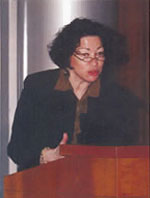 On Tuesday, May 26, 2009, President Barack Obama announced his choice of federal appeals judge Sonia Sotomayor as nominee to become the nation's first Hispanic Supreme Court justice. Judge Sotomayor spoke at the Indiana University School of Law - Indianapolis on March 21, 2003 (see photo) at the Pro Bono Program’s "Decade of Giving" Celebration. She spoke about the importance of attorneys giving back to the community through pro bono projects and suggested that there are opportunities for pro bono work in every area of legal practice.
Commenting on Sotomayor’s nomination to the nation’s highest court, Professor María Pabón López said, “This is an exciting day--one for which the Latino community in the U.S had been eagerly awaiting. President Obama is to be commended for his choice. As a fellow Puerto Rican and Princeton graduate, the nomination of Judge Sotomayor has special significance for me. I know her path has not been an easy one, overcoming obstacles and breaking barriers all the way, yet she is an accomplished jurist who makes the rule of law, fairness and justice her top priorities. As the only Latino law professor at my school and the first Latino tenured here as well, Judge Sotomayor’s nomination gives me hope that the Supreme Court will have a member who understands the struggles of those of us who work in systems where we have been and continue to be underrepresented.”
Professor López notes the following notable qualities about Judge Sotomayor:
1. Judge Sotomayor’s incredible American story and three decade distinguished career in nearly every aspect of the law provide her with unique qualifications to be the next Supreme Court justice.
2. As a prosecutor, litigator, and trial and appellate judge, Judge Sotomayor brings more federal judicial experience to the Supreme Court than any justice in 100 years, and more overall judicial experience than anyone confirmed for the Court in the past 70 years.
3. Judge Sotomayor is widely admired as a judge with a sophisticated grasp of legal doctrine and a keen awareness of the law’s impact on everyday life. She understands that upholding the rule of law means going beyond legal theory to ensure consistent, fair, common-sense application of the law to real-world facts.
SPANISH TRANSLATION of Professor López’s comments:
Comentarios de la Profesora María Pabón López sobre el nombramiento de la Juez Sonia Sotomayor
Este es un día emocionante, el cual esperaba con anhelo por mucho tiempo la comunidad Latina. Hay que felicitar al Presidente Obama por su selección. Como soy también puertorriqueña y graduada de la Universidad de Princeton, como la juez Sotomayor, su nombramiento tiene un significado especial para mí. Se que su camino no ha sido fácil, ella ha superado obstáculos y roto barreras pero aún así es una juez excelente, quien hace que el derecho y la justicia sean sus mayores prioridades. Como soy la única profesora Latina en mi facultad y la primera con permanencia, el nombramiento de la Juez Sotomayor me da la esperanza de que el Tribunal Supremo tendrá un miembro que entiende las luchas de los que trabajamos en sistemas donde los Latinos carecen y han carecido de representación. Los siguientes puntos, que se encuentran en circulación, son notables en cuanto a ella:
Ju La juez Sotomayor tiene una historia personal increíble y una carrera distinguida durante tres décadas laborando en casi todos los aspectos del derecho. Esto le da cualidades únicas para ser la próxima juez del Tribunal Supremo.
2. Como fiscal, abogada litigante, y juez de tribunales de instancia y apelativo, la juez Sotomayor trae más experiencia federal jurídica al Tribunal Supremo que ningún otro juez del Supremo en los últimos 100 años, and más experiencia jurídica que cualquier otra persona confirmada para el Tribunal en los últimos 70 años.
3. La Juez Sotomayor goza de amplia admiración de ser una juez que tiene una apreciación sofisticada de la doctrina legal y un conocimiento afilado sobre las realidades de cómo las leyes afectan la vida cotidiana. Ella entiende que el mantener el estado del derecho consiste de ir mas allá de la teoría legal y que hay que asegurarse de que la ley se aplique consistentemente y justamente a los hechos de la vida real
